
Jan 22 2024
Davos 2024: Making AI work for the world
The Davos 2024 World Economic Forum emerged as a defining moment, signaling a significant shift in the global conversation. Artificial Intelligence (AI), once a burgeoning field of interest, has now ascended to the forefront, supplanting topics like cryptocurrencies as the primary focus of discussion. This transition highlights AI’s growing dominance in shaping the economic and societal narratives of our times, and positions it as the central axis around which future policies and strategies will revolve.
As world leaders, industry experts, and academics convened, Davos 2024 rightly titled “Making AI Work for the World,” unveiled a vision of the future where AI’s expansive capabilities are harnessed for global benefit. This year’s forum was about celebrating the technological wonders AI promises but also about deeply contemplating the weighty ethical dilemmas and responsibilities it carries. Participants were called to consider how AI is redefining every aspect of our existence, from professional landscapes to governance structures, and to engage in crafting a pathway towards an AI-integrated future that is not only progressive but also equitable and sustainable.
Davos 2024 aimed to recalibrate the global narrative, ensuring that as we embrace the extraordinary potential of AI, we remain grounded in our commitment to fostering an inclusive, ethical, and forward-thinking world. The discussions set the tone for a future where AI does not just serve the few but empowers the many, a future where the march of technology is in step with the values of humanity.
Balancing AI productivity & Responsibility: AI’s potential to enhance productivity is immense, yet its advancement must be harnessed with a strong ethical compass, said OpenAI CEO Sam Altman. This sentiment was echoed throughout the summit, where leaders called for governance frameworks that marry innovation with data privacy and accountability. India’s watermarking proposal exemplified the practical steps nations are taking to ensure AI is utilized ethically.
Global AI Governance: Emphasizing Collective Stewardship. The consensus at Davos 2024 was clear: AI’s influence transcends borders, necessitating a unified approach to its governance. Stakeholders from around the globe recognized the need for a governance model that not only propels technological advancement but is also rooted in ethical practices. The aim is to ensure the equitable distribution of AI’s benefits, fostering a future where progress is synonymous with fairness and inclusivity. This collective vision for AI governance is set to lay the foundation for a future where technology serves the global common good.
AI’s Ethical & productive balance: The forum’s discussions on AI seamlessly transitioned from its potential to revolutionize productivity to the ethical responsibilities it entails. OpenAI CEO Sam Altman’s statement, “We must guide AI’s advancement with a strong ethical compass,” resonated with the attendees. This segment of the conference emphasized the need for governance frameworks that integrate innovation with data privacy and accountability. India’s proposal to watermark AI products stood out as a pragmatic step towards ensuring ethical AI usage.
Inclusivity in AI Development: The next pivotal topic at Davos 2024 was the critical role of inclusivity in AI development. Speakers from diverse backgrounds underscored the need to incorporate varied perspectives, especially from the Global South, to ensure AI’s universal applicability and benefits. “Inclusivity is the cornerstone of effective AI development,” noted a panelist from an emerging economy, highlighting the significance of this approach.
Generative AI & Economic impact: The economic influence of Generative AI (GenAI), estimated to contribute $4 trillion annually to the global economy, provided a concrete backdrop to the discussions. However, this financial potential is not without challenges. A representative from the World Economic Forum’s Centre for the Fourth Industrial Revolution advised, “We must tackle GenAI’s complexities with collaborative governance,” emphasizing the need for industry-regulatory synergy.
Workforce Dynamics in the age of AI: The conversations then naturally progressed to the impact of AI on workforce dynamics. The IMF report suggested a dual perspective of AI as both a disruptor and creator of job opportunities, prompting businesses to adapt their workforce strategies. “Investing in AI and workforce development concurrently is vital, a business leader emphasized, advocating for a forward-looking approach to labor market changes.
As Davos 2024 concluded, the forum not only reflected on the current state of AI but also cast a vision for its future. The unified message was clear: as AI advances, its integration into our lives and economies must be responsibly and inclusively managed. Looking ahead, AI is expected to become an integral part of daily life and industry. Experts anticipate AI-driven innovations in areas like healthcare and climate change, and the rise of personalized AI assistants. The future of AI is a tapestry of innovation and ethical governance,” concluded a keynote speaker, urging stakeholders to commit to a balanced, human-centric approach to AI development.
Jan 08 2024
The Anatomy of Augmented Analytics in 2024
In 2024, augmented analytics has reshaped data analysis, marrying AI’s analytical power with human insight to make complex data accessible and actionable. This synergy automates and accelerates the extraction of insights, empowering decision-makers across all skill levels. With tools that interpret vast datasets through natural language processing, we’re witnessing a democratization of business intelligence that’s fostering informed, data-driven decision-making at unprecedented scales.

Jan 09 2023
Martech 2023: Data And Customer-First Wants For A Stake In Antifragility
There’s no escaping that the world economy is going through uncontrollable inflation.
As the economic reality sharpens, including a higher cost of living, consumers’ expectations are changing and they are becoming more cautious and frugal. However, we don’t live in a paradigm where inflation and recession are necessarily enemies, but more where uncertainty and fragility are friends.
PROMOTED
In other words, this situation still opens up growth opportunities in share-of-wallet gain for those who understand the new rules of customer trust and engagement. Economic downturns, in fact, can help fuel innovation and creativity. Especially if supplemented by data and insights, new business opportunities arise.
Digital Acceleration And Data
The digital acceleration and the pandemic have revealed new customers’ expectations and changing behaviors, from privacy-first expectations to frictionless and more personalized experiences. This pushes corporates to rethink their brand values, realizing the necessity to trade off against things like repetitive interactions in order to establish a more balanced concept of “shared interests.”
MORE FROM FORBES ADVISOR
Best Travel Insurance Companies
By Amy Danise EditorYour data asset can become a rescuable element during such turmoil to combat fragility and show you a contextual way forward—allowing you to adapt to economic slow-downs and changing consumer expectations. Data, and more specifically actionable insights, can reveal what should be prioritized, guiding you toward an incrementality strategy and alerting you to points of friction.
However, big data can be a challenge for marketers who can become overwhelmed with information that is costly or difficult to fully capture and analyze. Data pulled as third-party data might be contaminated, and I think we are witnessing a huge amount of wasted data as a result. Marketers will have to identify and map their good data and focus on the relevant insights within the customer journey. I see this need as a focus on generating more voluntarily shared data from consumers, or zero-party data.
What The Customer Wants
As consumers increasingly look to immediacy with their purchases and services, having zero tolerance for digital inconvenience is a must. Brands need to become “friction hunters,” rooting out these inconveniences and showing more care for frustrated customers. Businesses need to leverage the power of AI and predictive analytics to open up new avenues for proactive practices—surpassing today’s reactive modes and identifying issues before they occur.
Customers want to live in their own world and not necessarily in the world we try to push them to. Harnessing predictive analytics to anticipate behaviors and identify customer experiences in real time can preempt friction in the customer journey.
Customers being surprised by something they love or a favorite product being proposed seemingly accidentally fulfills a new serendipity syndrome that is becoming center stage in any customer experience. In the same context, the rules of customer relationship values are changing. Pre-pandemic loyalty started from the customer to the brand; today, I believe it should always start from the brand, and you should use shared interests to gain the customers’ trust and appreciation.
The new customer life-cycle is facing challenges that are nonlinear and multifaceted, including obtaining consent for data sharing, focusing on the needs and interests of the customer and effectively influencing customer emotions. These challenges can be overwhelming.
The breadth of customer engagement is similar to being in a relationship with someone you love. Your partner is your customer, and you are in a relationship based on interactions. But a strong relationship is only possible if trust is confirmed within the couple—with harmony and passion a part of the mix as well.
You have to discover what’s important to your lover/customer and you need to listen. Your customer relationship doesn’t end after they make a purchase; in fact, it’s just beginning.
The Customer Engagement Index
In response to these changing needs, I strongly believe we will soon see the emergence of a measurable “customer engagement index.” My version of the customer engagement index is an aggregate of a trust score, a comfort score and a passion score.
First, trust is essential and begins with respecting customer data privacy, being transparent in your communication and increasing your social proof around your shared-interest values.
Next, comfort comes out of satisfactory interactions, resulting from many dimensions such as convenience, relevance, immediacy and frugality.
Lastly, passion is built through the adoption of a hyper-personalization approach and is associated with serendipity and an aspirational spirit. As a part of this, you should also show empathy, social responsibility and loyalty toward your clients.
I see the future of data signals as the triangulation of three pillars:
1. Signals aggregations through deterministic analytics (sentiment analysis, social media tracking, etc.).
2. Probabilistic signals (friction hunting and the measurement of potential loyalty of clients).
3. Prescriptive analytical models that can create conversational marketing with multi-dimensional customer centricity.
Final Thoughts
Data is a good corporate asset; insights from data are even more valuable. As big data can be overwhelming and costly, brands should look for shortcuts to help identify their good, relevant data, and connect the dots to unlock quality and actionable insights. The marketing race is all about being able to experiment with customer experience analytics more quickly than the other parties.
Overall, to minimize failures, brands should avoid basing their marketing decisions on false and skewed data, as there are so many deceitful activities and forms of fake traffic that are mimicking supposedly customer behavior—including fake reviews and click fraud.
What I call good data can allow brands to have their finger on the pulse of their customers’ ever-changing expectations, helping them bring their shared-interest values to the forefront and transform a customer interaction or relation into a long-term asset.
Brands still have a lot to do to be ready for a cookieless ecosystem. They will need to rely on durable first-party data solutions and look to implement alternative options such as social listening and other artificial intelligence capabilities. Alternatively, they will need to engage with customers for voluntary zero-party data.
Jan 08 2024
The Anatomy of Augmented Analytics in 2024
In 2024, augmented analytics has reshaped data analysis, marrying AI’s analytical power with human insight to make complex data accessible and actionable. This synergy automates and accelerates the extraction of insights, empowering decision-makers across all skill levels. With tools that interpret vast datasets through natural language processing, we’re witnessing a democratization of business intelligence that’s fostering informed, data-driven decision-making at unprecedented scales.
Jan 22 2024
Davos 2024: Making AI work for the world
The Davos 2024 World Economic Forum emerged as a defining moment, signaling a significant shift in the global conversation. Artificial Intelligence (AI), once a burgeoning field of interest, has now ascended to the forefront, supplanting topics like cryptocurrencies as the primary focus of discussion. This transition highlights AI’s growing dominance in shaping the economic and societal narratives of our times, and positions it as the central axis around which future policies and strategies will revolve.
As world leaders, industry experts, and academics convened, Davos 2024 rightly titled “Making AI Work for the World,” unveiled a vision of the future where AI’s expansive capabilities are harnessed for global benefit. This year’s forum was about celebrating the technological wonders AI promises but also about deeply contemplating the weighty ethical dilemmas and responsibilities it carries. Participants were called to consider how AI is redefining every aspect of our existence, from professional landscapes to governance structures, and to engage in crafting a pathway towards an AI-integrated future that is not only progressive but also equitable and sustainable.
Davos 2024 aimed to recalibrate the global narrative, ensuring that as we embrace the extraordinary potential of AI, we remain grounded in our commitment to fostering an inclusive, ethical, and forward-thinking world. The discussions set the tone for a future where AI does not just serve the few but empowers the many, a future where the march of technology is in step with the values of humanity.
Balancing AI productivity & Responsibility: AI’s potential to enhance productivity is immense, yet its advancement must be harnessed with a strong ethical compass, said OpenAI CEO Sam Altman. This sentiment was echoed throughout the summit, where leaders called for governance frameworks that marry innovation with data privacy and accountability. India’s watermarking proposal exemplified the practical steps nations are taking to ensure AI is utilized ethically.
Global AI Governance: Emphasizing Collective Stewardship. The consensus at Davos 2024 was clear: AI’s influence transcends borders, necessitating a unified approach to its governance. Stakeholders from around the globe recognized the need for a governance model that not only propels technological advancement but is also rooted in ethical practices. The aim is to ensure the equitable distribution of AI’s benefits, fostering a future where progress is synonymous with fairness and inclusivity. This collective vision for AI governance is set to lay the foundation for a future where technology serves the global common good.
AI’s Ethical & productive balance: The forum’s discussions on AI seamlessly transitioned from its potential to revolutionize productivity to the ethical responsibilities it entails. OpenAI CEO Sam Altman’s statement, “We must guide AI’s advancement with a strong ethical compass,” resonated with the attendees. This segment of the conference emphasized the need for governance frameworks that integrate innovation with data privacy and accountability. India’s proposal to watermark AI products stood out as a pragmatic step towards ensuring ethical AI usage.
Inclusivity in AI Development: The next pivotal topic at Davos 2024 was the critical role of inclusivity in AI development. Speakers from diverse backgrounds underscored the need to incorporate varied perspectives, especially from the Global South, to ensure AI’s universal applicability and benefits. “Inclusivity is the cornerstone of effective AI development,” noted a panelist from an emerging economy, highlighting the significance of this approach.
Generative AI & Economic impact: The economic influence of Generative AI (GenAI), estimated to contribute $4 trillion annually to the global economy, provided a concrete backdrop to the discussions. However, this financial potential is not without challenges. A representative from the World Economic Forum’s Centre for the Fourth Industrial Revolution advised, “We must tackle GenAI’s complexities with collaborative governance,” emphasizing the need for industry-regulatory synergy.
Workforce Dynamics in the age of AI: The conversations then naturally progressed to the impact of AI on workforce dynamics. The IMF report suggested a dual perspective of AI as both a disruptor and creator of job opportunities, prompting businesses to adapt their workforce strategies. “Investing in AI and workforce development concurrently is vital, a business leader emphasized, advocating for a forward-looking approach to labor market changes.
As Davos 2024 concluded, the forum not only reflected on the current state of AI but also cast a vision for its future. The unified message was clear: as AI advances, its integration into our lives and economies must be responsibly and inclusively managed. Looking ahead, AI is expected to become an integral part of daily life and industry. Experts anticipate AI-driven innovations in areas like healthcare and climate change, and the rise of personalized AI assistants. The future of AI is a tapestry of innovation and ethical governance,” concluded a keynote speaker, urging stakeholders to commit to a balanced, human-centric approach to AI development.
Jan 08 2024
The Anatomy of Augmented Analytics in 2024
In 2024, augmented analytics has reshaped data analysis, marrying AI’s analytical power with human insight to make complex data accessible and actionable. This synergy automates and accelerates the extraction of insights, empowering decision-makers across all skill levels. With tools that interpret vast datasets through natural language processing, we’re witnessing a democratization of business intelligence that’s fostering informed, data-driven decision-making at unprecedented scales.
Jan 09 2023
Martech 2023: Data And Customer-First Wants For A Stake In Antifragility
There’s no escaping that the world economy is going through uncontrollable inflation.
As the economic reality sharpens, including a higher cost of living, consumers’ expectations are changing and they are becoming more cautious and frugal. However, we don’t live in a paradigm where inflation and recession are necessarily enemies, but more where uncertainty and fragility are friends.
PROMOTED
In other words, this situation still opens up growth opportunities in share-of-wallet gain for those who understand the new rules of customer trust and engagement. Economic downturns, in fact, can help fuel innovation and creativity. Especially if supplemented by data and insights, new business opportunities arise.
Digital Acceleration And Data
The digital acceleration and the pandemic have revealed new customers’ expectations and changing behaviors, from privacy-first expectations to frictionless and more personalized experiences. This pushes corporates to rethink their brand values, realizing the necessity to trade off against things like repetitive interactions in order to establish a more balanced concept of “shared interests.”
MORE FROM FORBES ADVISOR
Best Travel Insurance Companies
By Amy Danise EditorYour data asset can become a rescuable element during such turmoil to combat fragility and show you a contextual way forward—allowing you to adapt to economic slow-downs and changing consumer expectations. Data, and more specifically actionable insights, can reveal what should be prioritized, guiding you toward an incrementality strategy and alerting you to points of friction.
However, big data can be a challenge for marketers who can become overwhelmed with information that is costly or difficult to fully capture and analyze. Data pulled as third-party data might be contaminated, and I think we are witnessing a huge amount of wasted data as a result. Marketers will have to identify and map their good data and focus on the relevant insights within the customer journey. I see this need as a focus on generating more voluntarily shared data from consumers, or zero-party data.
What The Customer Wants
As consumers increasingly look to immediacy with their purchases and services, having zero tolerance for digital inconvenience is a must. Brands need to become “friction hunters,” rooting out these inconveniences and showing more care for frustrated customers. Businesses need to leverage the power of AI and predictive analytics to open up new avenues for proactive practices—surpassing today’s reactive modes and identifying issues before they occur.
Customers want to live in their own world and not necessarily in the world we try to push them to. Harnessing predictive analytics to anticipate behaviors and identify customer experiences in real time can preempt friction in the customer journey.
Customers being surprised by something they love or a favorite product being proposed seemingly accidentally fulfills a new serendipity syndrome that is becoming center stage in any customer experience. In the same context, the rules of customer relationship values are changing. Pre-pandemic loyalty started from the customer to the brand; today, I believe it should always start from the brand, and you should use shared interests to gain the customers’ trust and appreciation.
The new customer life-cycle is facing challenges that are nonlinear and multifaceted, including obtaining consent for data sharing, focusing on the needs and interests of the customer and effectively influencing customer emotions. These challenges can be overwhelming.
The breadth of customer engagement is similar to being in a relationship with someone you love. Your partner is your customer, and you are in a relationship based on interactions. But a strong relationship is only possible if trust is confirmed within the couple—with harmony and passion a part of the mix as well.
You have to discover what’s important to your lover/customer and you need to listen. Your customer relationship doesn’t end after they make a purchase; in fact, it’s just beginning.
The Customer Engagement Index
In response to these changing needs, I strongly believe we will soon see the emergence of a measurable “customer engagement index.” My version of the customer engagement index is an aggregate of a trust score, a comfort score and a passion score.
First, trust is essential and begins with respecting customer data privacy, being transparent in your communication and increasing your social proof around your shared-interest values.
Next, comfort comes out of satisfactory interactions, resulting from many dimensions such as convenience, relevance, immediacy and frugality.
Lastly, passion is built through the adoption of a hyper-personalization approach and is associated with serendipity and an aspirational spirit. As a part of this, you should also show empathy, social responsibility and loyalty toward your clients.
I see the future of data signals as the triangulation of three pillars:
1. Signals aggregations through deterministic analytics (sentiment analysis, social media tracking, etc.).
2. Probabilistic signals (friction hunting and the measurement of potential loyalty of clients).
3. Prescriptive analytical models that can create conversational marketing with multi-dimensional customer centricity.
Final Thoughts
Data is a good corporate asset; insights from data are even more valuable. As big data can be overwhelming and costly, brands should look for shortcuts to help identify their good, relevant data, and connect the dots to unlock quality and actionable insights. The marketing race is all about being able to experiment with customer experience analytics more quickly than the other parties.
Overall, to minimize failures, brands should avoid basing their marketing decisions on false and skewed data, as there are so many deceitful activities and forms of fake traffic that are mimicking supposedly customer behavior—including fake reviews and click fraud.
What I call good data can allow brands to have their finger on the pulse of their customers’ ever-changing expectations, helping them bring their shared-interest values to the forefront and transform a customer interaction or relation into a long-term asset.
Brands still have a lot to do to be ready for a cookieless ecosystem. They will need to rely on durable first-party data solutions and look to implement alternative options such as social listening and other artificial intelligence capabilities. Alternatively, they will need to engage with customers for voluntary zero-party data.
Jan 31 2024
Redefining Customer Connection in the Digital Age
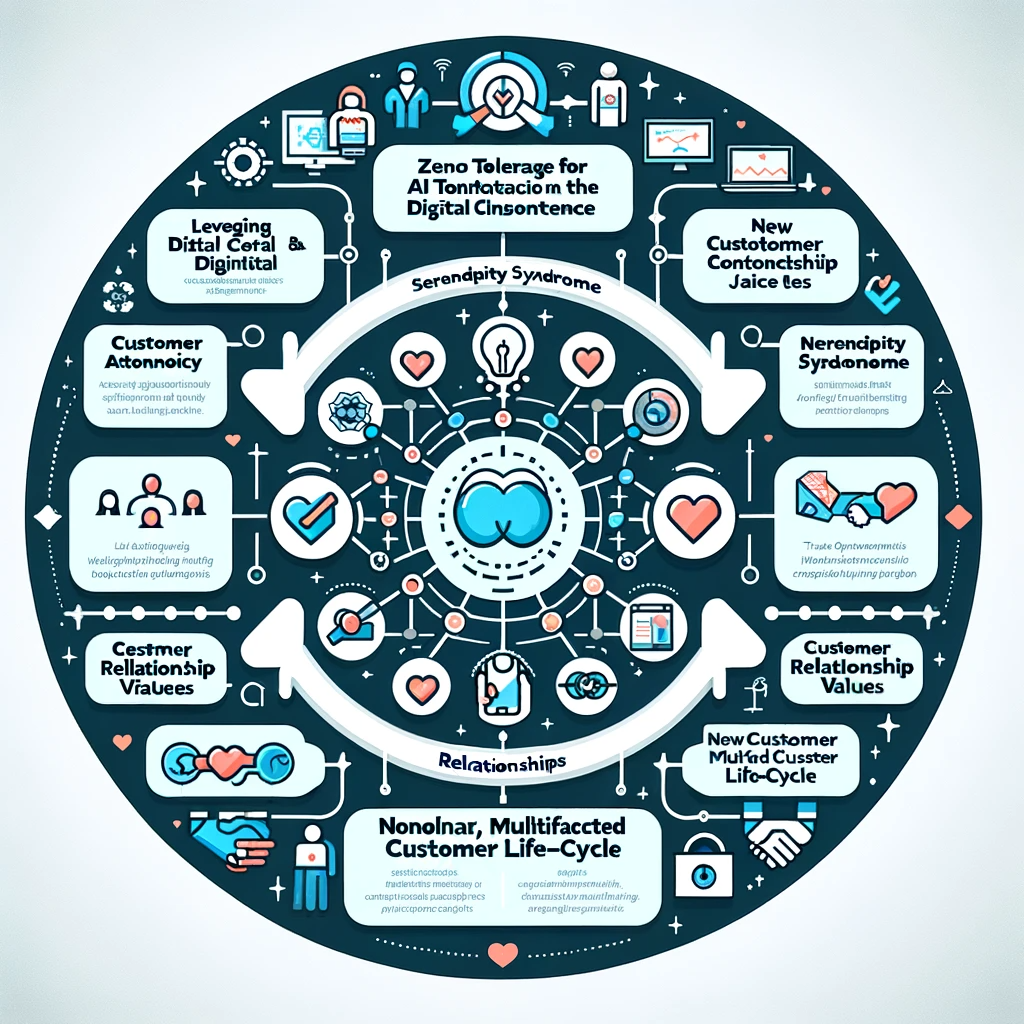
Leveraging AI and predictive analytics is key to shifting from reactive to proactive customer engagement, allowing businesses to anticipate and solve issues before they arise.
Zero Tolerance for Digital Inconvenience: Brands must eliminate digital inconveniences, becoming “friction hunters” to care for frustrated customers.
Customer Autonomy: Customers prefer to live in their own world, not the one brands push them towards.
Serendipity Syndrome: Customers enjoy being pleasantly surprised with products they love, enhancing their experience.
New Customer Relationship Values: Post-pandemic, brand loyalty should initiate from the brand towards the customer, using shared interests to build trust and appreciation.
Nonlinear, Multifaceted Customer Life-Cycle: Challenges include obtaining consent for data sharing, focusing on customer needs and interests, and influencing customer emotions.
Customer Engagement as a Relationship: Comparable to a love relationship, where the customer is the partner and trust, harmony, and passion are essential.
Continuous Relationship Building: Understanding what’s important to customers and continuous engagement is key, as the customer relationship doesn’t end after a purchase, but rather begins.
Jan 31 2024
The Customer Engagement Index
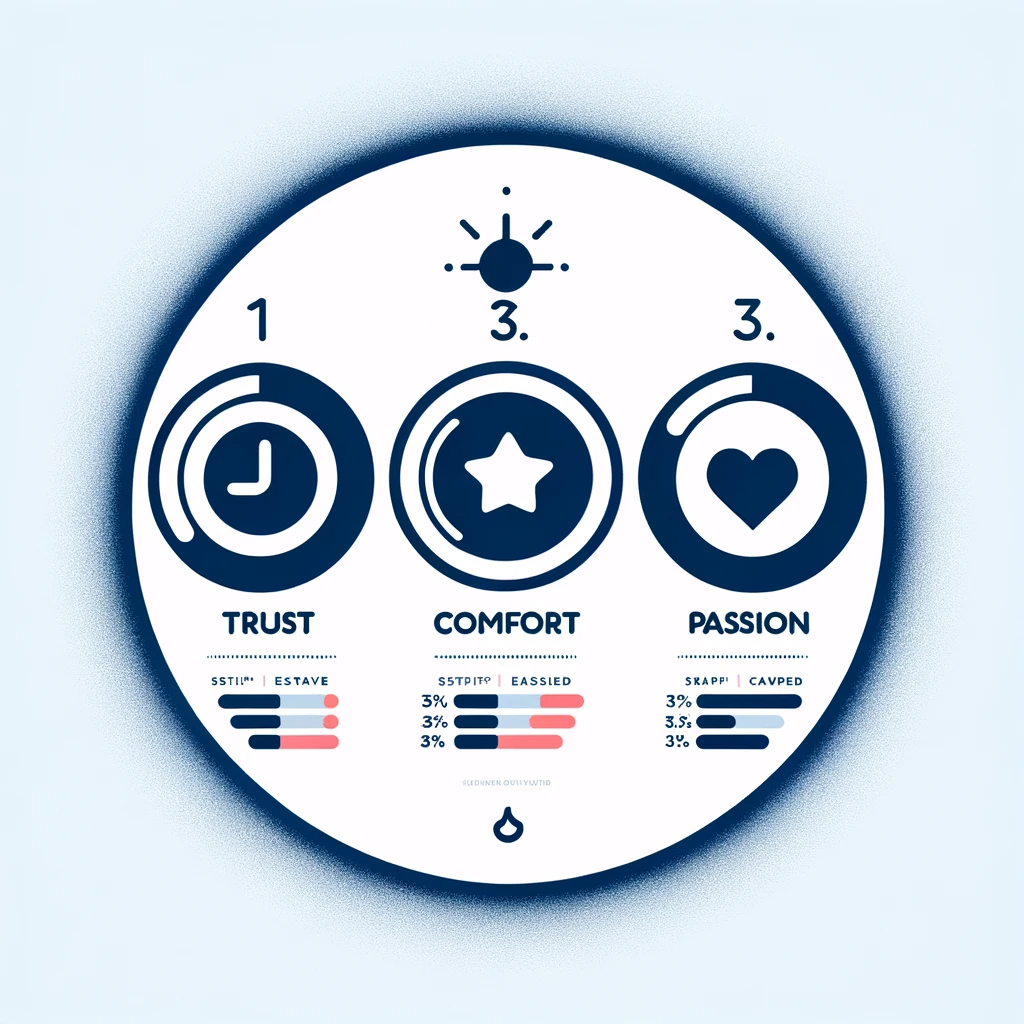
The customer engagement index is an aggregate of a trust score, a comfort score and a passion score.
First, trust is essential and begins with respecting customer data privacy, being transparent in your communication and increasing your social proof around your shared-interest values.
Next, comfort comes out of satisfactory interactions, resulting from many dimensions such as convenience, relevance, immediacy and frugality.
Lastly, passion is built through the adoption of a hyper-personalization approach and is associated with serendipity and an aspirational spirit. As a part of this, you should also show empathy, social responsibility and loyalty toward your clients.
The future of data signals as the triangulation of three pillars:
1-Signals aggregations through deterministic analytics (sentiment analysis, social media tracking, etc.).
2-Probabilistic signals (friction hunting and the measurement of potential loyalty of clients).
3-Prescriptive analytical models that can create conversational marketing with multi-dimensional customer centricity.
Dec 14 2020
WHY TRANSACTIONAL DATA IS KEY ?
THE SCIENCE OF
CUSTOMER ANALYTICS
Dec 14, 2020
INSIGHT
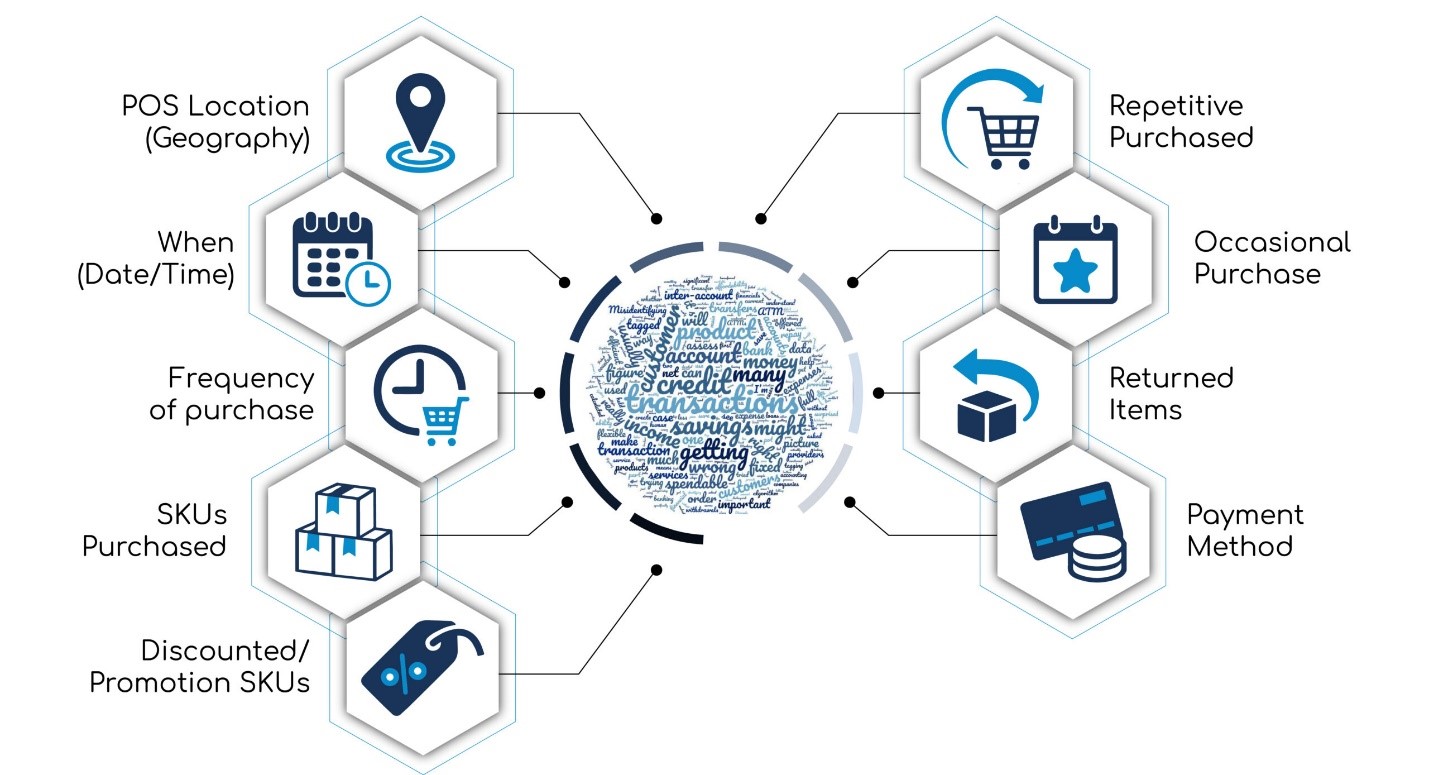
Rich POS Data Collection
POS Data Advantages
Data Purely: Best class of data accuracy
Completeness : Provide a richer set of performance measures
Timeliness : Allow more meaningful marketing actions
Rich in Insights: Uncover customer insights, behavior & preferences
Impact

UNLEASHING BUSINESS OPPORTUNITIES
Uncover High-value customers
Identify eligible target to become loyal
customers
Discover the Cherry pickers to be nurtured
Understand Promotions dynamics
Explore Cross-sell opportunities
Identify canabilization risks
Dec 14 2020
THE SCIENCE OF CUSTOMER ANALYTICS
Dec 14, 2020
INSIGHT
Rich POS Data Collection
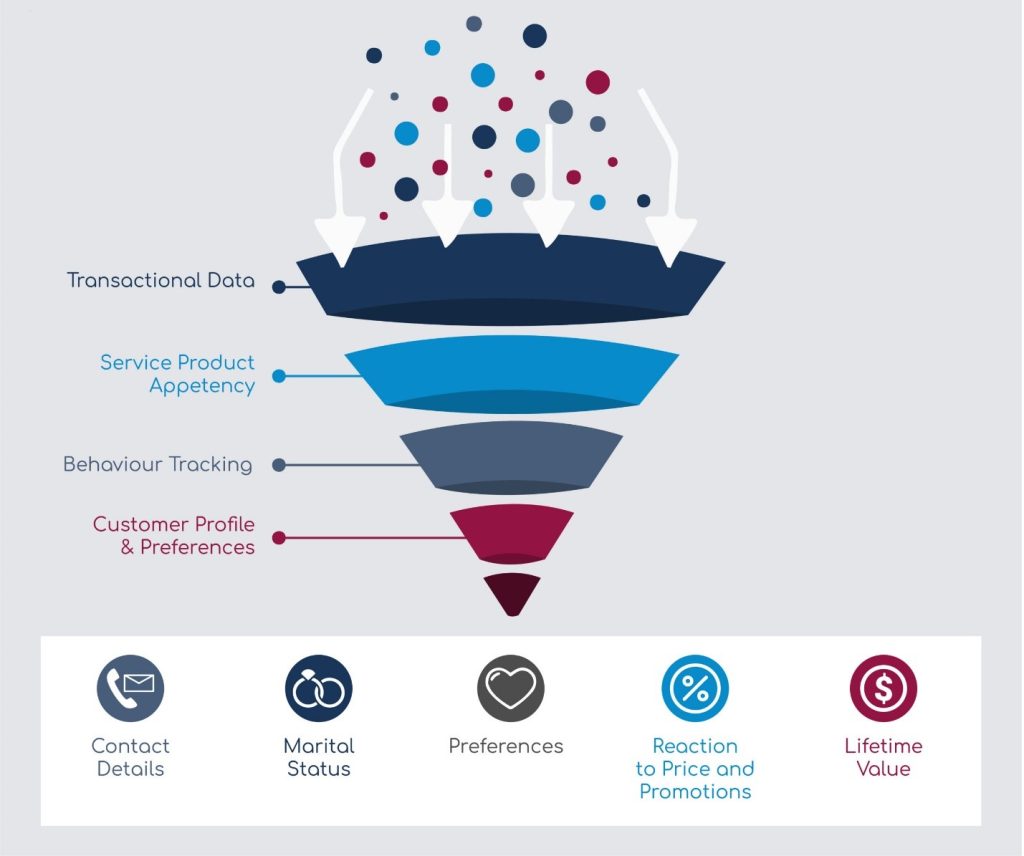
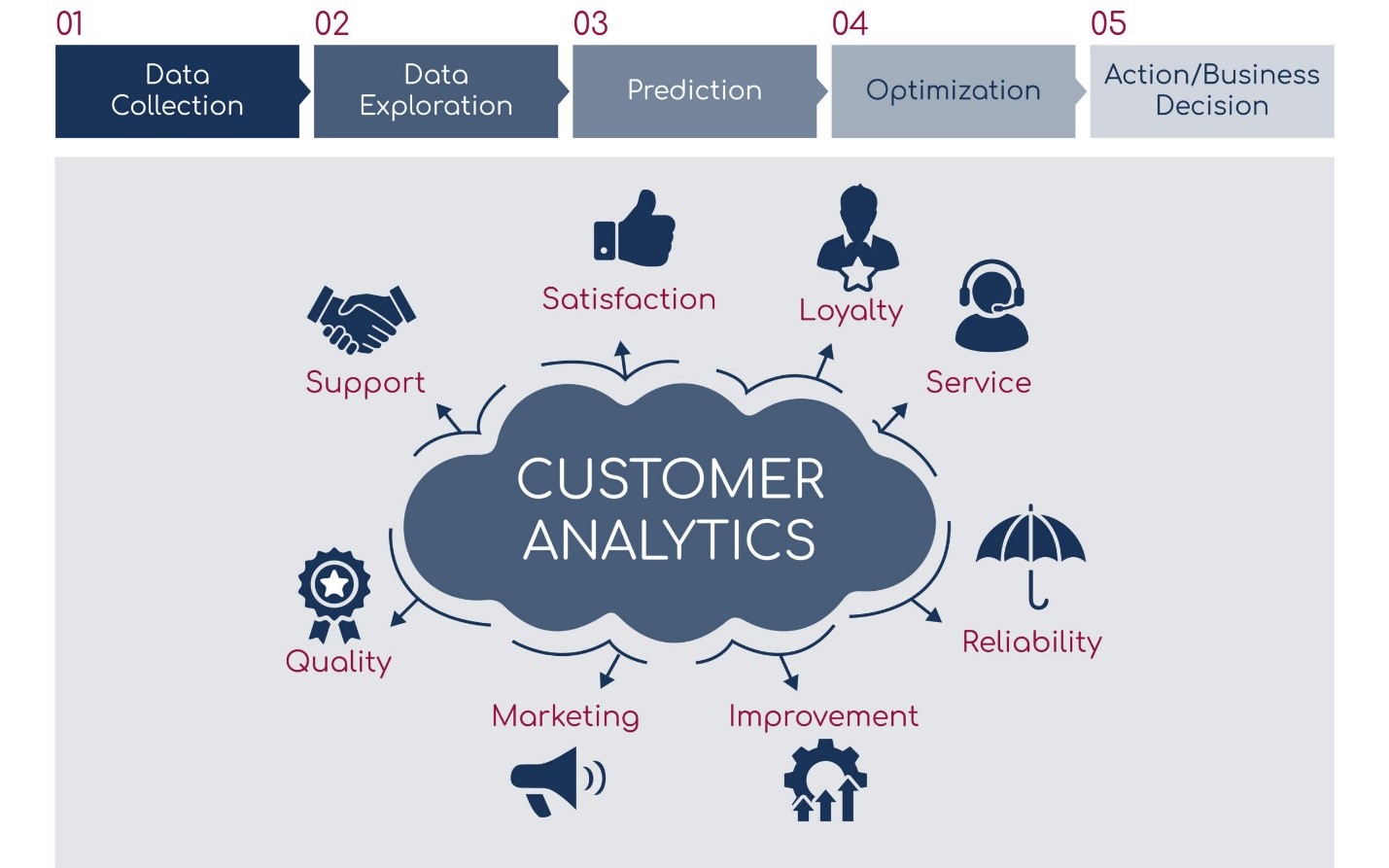
Marketing has always been a blend of art and science. Right now, science is clearly on top. Data-driven marketing powered by new marketing technologies such as Customer analytics has become a growing focus among marketers. Customer analytics is defined as the use of analytics to study customer behavior for effective business decisions through market segmentation and predictive analytics. Customer Analytics Marketing refers in first instance to data collection and management, analysis, and strategic leverage of an organization’s granular data about the behavior of its customers.
A five stage approach:
Customer Analytics can be characterized as:
Inherently Granular :Focus on individual-level behavior, not on aggregate patterns
Behavioral :Focus on observed behavioral patterns, not demographics or attitudes
Forward-Looking :An orientation towards prediction, not just description
Multi-Platform :Desire to combine behaviors from multiple measurement system
Broadly Applicable: “Customer” can be a suer, reader, visitor, client, donor, etc.
Multidisciplinary :Relevant fields include marketing, statistics, tech and AI, information science, and operations research